Discover how jumping rope strengthens your core and supports spinal health naturally.
Back pain and tension are issues I see every single day in the gym and the good news is that targeted movement can make a dramatic difference. Many people assume back pain means you should stop moving entirely, but that approach only weakens the muscles that actually support your spine. The diaphragm, abdominal-pelvic floor, hamstrings and inner thighs all work together to stabilize your lower back and neglecting them creates a cascade of problems. When these muscles stay strong and flexible, they take pressure off the spinal discs and reduce the kind of chronic discomfort that keeps people sedentary. Think of your core as a natural weight belt — it does the heavy lifting so your vertebrae don't have to.
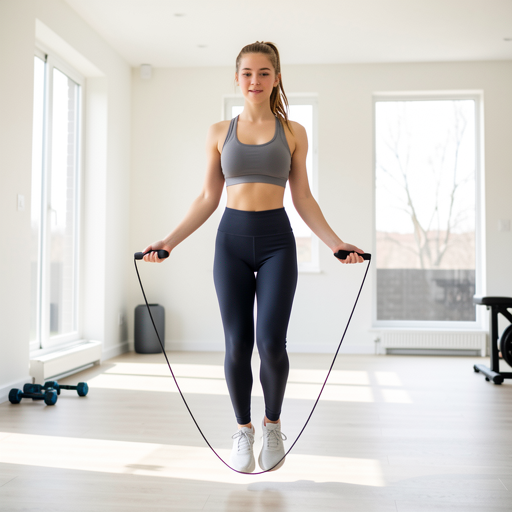
This is where I always recommend getting your heart rate up with a fun, accessible activity. Jumping rope is one of the best full-body exercises I know and it engages your core in ways that translate directly to better back support. The rhythmic bouncing builds endurance in the stabilizing muscles while keeping your joints mobile. More importantly, to skip effectively, you need to maintain proper posture and keep your core slightly braced throughout — which is exactly what helps protect the sacro-iliac joint and the psoas muscle group that runs from your femur up to your spine.
🚲
These deep muscles pull your body into alignment without you even thinking about it. I understand that when you're dealing with a pinched nerve, a bulging disc or the kind of deep ache that comes from degenerative disc disease, the idea of exercise can feel intimidating. But gentle, consistent movement is what keeps spinal discs nourished and reduces the calcium deposits that form from prolonged inactivity. A doctor might recommend specific exercises to strengthen your back and abdominal muscles and that guidance matters, but adding something like skipping into your routine takes things a step further.
👉🏼
The controlled impact stimulates circulation through the lower back, encourages nutrient flow into the disc tissue and builds the kind of muscular endurance that prevents future flare-ups. You do not need to go hard from day one — start with short intervals and gradually extend them. Building toward sixty seconds of continuous jumping rope is a practical goal that anyone can work toward. Work up to it progressively, maybe starting with forty-second intervals and resting in between.
🧘🏻♀️
Over weeks and months, that consistency becomes transformative for your back health. The pelvic muscles and psoas respond beautifully to this kind of steady, low-impact training. Your body adapts, your posture improves and the mechanical pressure on those vulnerable spinal discs decreases with each passing week. Stick with it, stay patient and your back will thank you for the effort you put in today.