Discover how this simple exercise builds strength, burns calories and improves coordination.
Jumping rope has quietly become one of the most efficient full-body workouts available to anyone willing to lace up a pair of sneakers. The simple cord that swings over your head and bounces beneath your feet engages your calves, shoulders, core and cardiovascular system in ways that most people never expect from something that looks so elementary. When you step onto a mat and start the rhythmic motion, your heart rate climbs steadily, your legs pump with controlled power and your shoulders fire with each wrist-driven rotation. This combination of aerobic conditioning and muscular endurance makes it a uniquely compact solution for people who want serious fitness without filling a garage with expensive equipment. The beauty lies in the simplicity: a length of cord, a handful of clearance space and the willingness to sustain the effort long enough for results to compound day after day.
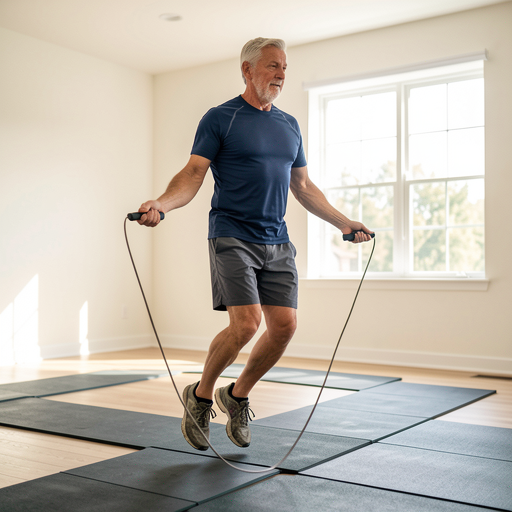
Anyone learning to jump rope should begin by understanding the mechanics of proper form before worrying about speed or tricks, and a training jump rope makes that form easier to hold. Your elbows should rest close to your sides, wrists doing the work rather than your entire arms. The rope should clear the ground by just a few inches, which means you do not need to lift your legs high or jump excessively. Small, controlled bounces keep the impact low and the rhythm steady.
👉🏼
Beginners often make the mistake of overthinking their footwork or trying to match the flashy routines seen on social media, but the real value comes from sustained, comfortable repetitions. Start with ten or fifteen minutes of continuous jumping, break as needed and gradually extend the sessions as your calves and forearms build the necessary endurance. The calorie expenditure from jumping rope puts it among the most time-efficient cardio activities you can choose. Research estimates that a person weighing roughly one hundred fifty-five pounds can burn approximately one hundred fifty to two hundred calories in just fifteen minutes of steady jumping, which translates to more than six hundred calories per hour of nonstop work.
🎖️
That figure surpasses many traditional gym activities while placing considerably less stress on the knees than running at comparable intensities. The low-impact nature of the exercise comes from the soft, springy motion that keeps your feet close to the ground, reducing the force each stride must absorb. For people who want to lose weight, improve stamina or simply stay active without spending hours at a commercial gym, jumping rope delivers measurable results with a fraction of the time commitment. Beyond the physical benefits, the practice cultivates coordination, rhythm and mental focus that spill into everyday life.
🕜
The need to keep time with the swinging cord forces your brain and body to synchronize, sharpening proprioception and reaction speed in ways that few other solo exercises achieve. You will notice improvements in balance, agility and even handwriting as your fine motor control develops through the repetitive wrist movements. Children and adults alike benefit from this neurological engagement, which is why physical education programs worldwide have returned to jump rope as a staple activity. Whether your goal is weight loss, athletic conditioning or simply a practical way to stay fit while traveling, the cord in your drawer remains one of the most versatile tools you can use to jump rope and keep your body moving.